Cylinder Head Rebuilding Services

Cleaning and Inspection
Each cylinder head is professionally inspected for cracks and undergoes pressure testing for coolant leaks when applicable. Additionally, we check the warp and thickness of the cylinder heads against OEM specifications before proceeding with any necessary resurfacing or valve jobs, and we also ensure that cam bearings are properly evaluated.
Valve Jobs
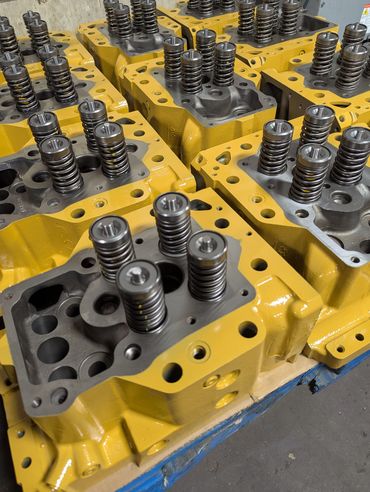
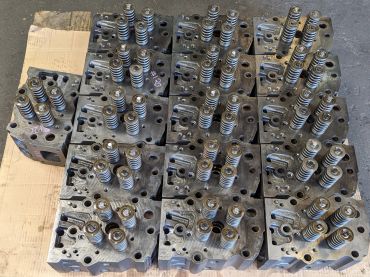
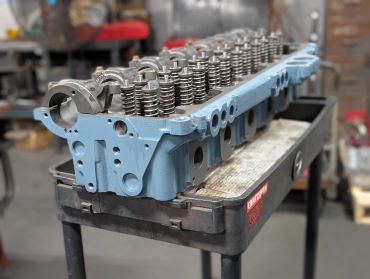
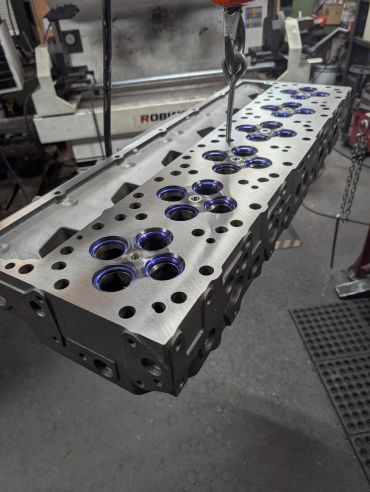
All valve jobs performed utilize a 3-angle valve seat cutting method with carbide seat cutters on a Rottler or Robins seat and guide machine. These three angle valve jobs are crucial for optimizing air intake and exhaust, thereby enhancing efficiency and power. During the valve train inspection, each valve stem and margin is meticulously checked against OEM specifications and for any damage. Springs are inspected for signs of wear and damage, and their pressures are carefully measured against OEM specifications. Valve keepers also undergo inspection for wear, while rotocoils are examined to ensure proper rotation and assess any wear. To guarantee the longevity of cylinder heads, wearable items such as valve guides, valve stem seals, cam bearings, and injector tube o-rings are replaced as needed. Any component that fails to meet OEM usage specifications is swapped out for new OEM spec components. Utilizing the incorrect valve and seat combination can lead to failure and/or premature wear on valves and seats, drastically reducing the lifespan of the head and necessitating a rebuild sooner, which may end up costing you more. This consideration is especially critical for EGR, natural gas, and propane powered cylinder heads due to their tougher valve and seat combinations. Upon request, cylinder heads can be completely rebuilt using all new components, including thorough pressure testing and resurfacing to ensure optimal performance.
Resurfacing
Every cylinder head can be resurfaced as long as it meets OEM specifications for the thickness of the cylinder head casting. In some situations, a valve job may be necessary to ensure the valves remain within specifications, especially after resurfacing removes material from the head's surface. Additionally, pressure testing may be performed to verify the integrity of the cylinder heads, and cam bearings should be inspected during the process for optimal engine performance.
Injector Tubes
Injector tubes or cups and o-rings are replaced when necessary or during a full rebuild to ensure a solid seal. This process, which may also involve resurfacing and pressure testing of the cylinder heads, helps provide a long-lasting component. Additionally, incorporating new cam bearings and performing valve jobs can further enhance the durability and performance of the engine.
Cam Bearings
Cam bearings are replaced on every rebuilt cylinder head, as well as during valve jobs, and/or when requested by customers, using new parts that meet or exceed OEM specifications. This process ensures that all cylinder heads undergo thorough pressure testing and resurfacing to maintain optimal performance.
Quality Assurance
Each cylinder head undergoes thorough inspection after resurfacing and any machine work has been completed. Cylinder heads are then subjected to pressure testing following the installation of injector cups or tubes. Additionally, valve keepers are carefully inspected and tested to ensure they are securely locked in place after the valve jobs are performed. A vacuum is applied to all valves to confirm a proper seal, and valve recessions are checked to ensure compliance with factory guidelines.
Photo Gallery